
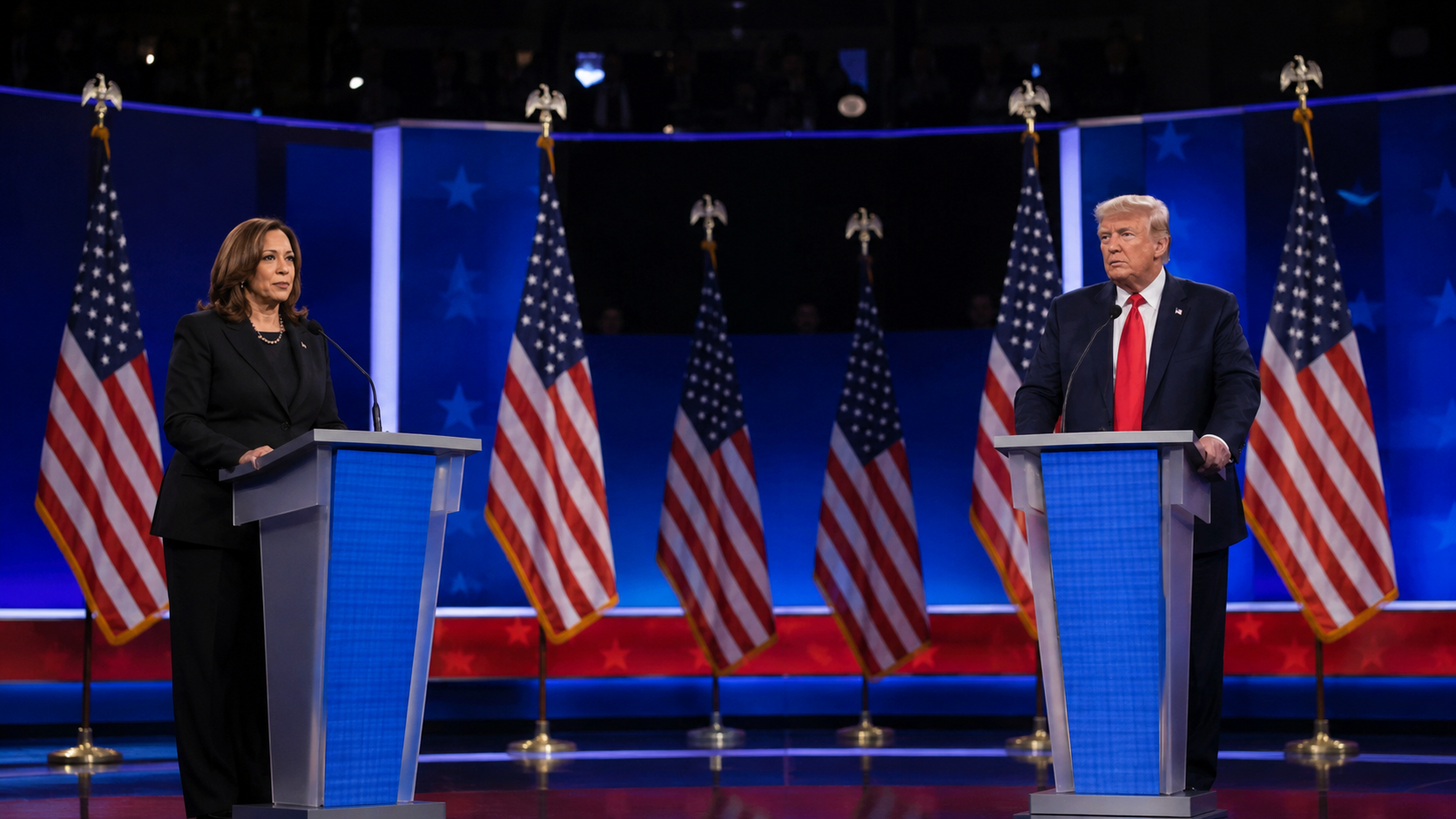
The Facts
The 2024 presidential debate between Vice President Kamala Harris and former President Donald Trump took place on Sept. 10, 2024, at the National Constitution Center in Philadelphia. The debate was hosted by ABC News and moderated by David Muir and Linsey Davis. ABC News reported that the event lasted more than 90 minutes and included discussion of major voter concerns such as the economy, immigration, climate change, and reproductive rights. The debate drew national attention because Harris and Trump represented sharply different political styles, policy priorities, and visions for the country. Harris entered the debate with experience as a former prosecutor, U.S. senator, and vice president. Trump entered as a former president, Republican nominee, businessman, and central figure in modern conservative politics. Harris emphasized issues connected to governance, democracy, reproductive rights, economic opportunity, and national unity. Trump focused heavily on immigration, inflation, border security, national strength, and criticism of the Biden-Harris administration.
The Political Contrast
The debate reflected two very different approaches to leadership. Harris presented herself as a candidate focused on stability, coalition-building, and policies aimed at addressing economic and social concerns. Her background as a prosecutor and senator shaped her debate style, especially when challenging Trump’s record and responding to questions about policy. Trump relied on the direct and confrontational communication style that has long defined his political brand. His remarks focused on national decline, border enforcement, economic frustration, and his argument that the country had been stronger under his administration. For voters, the debate offered more than a comparison of policy positions. It also presented a comparison of temperament, messaging, and political identity.
Our Perspective
A Harris-Trump debate was always going to be more than a standard political exchange. Both candidates represented competing visions of America. Harris spoke to voters looking for continuity, representation, institutional experience, and policy-driven responses to national issues. Trump spoke to voters frustrated with the current political system and drawn to his promises of strength, disruption, and economic revival. That contrast matters because debates are not only about who gives the better answer. They are also about how candidates handle pressure, communicate priorities, and respond when challenged. In this debate, Harris appeared to focus on presenting herself as prepared, steady, and capable of leading a broad coalition. Trump aimed to energize his supporters, sharpen criticism of the current administration, and frame the election as a choice between decline and restoration.
Why It Matters
Presidential debates can influence public perception, especially among undecided voters or those only loosely following the campaign. They give voters a chance to see candidates respond in real time, defend their records, and explain how they would handle major national issues. The Harris-Trump debate touched on several issues central to the 2024 election, including the economy, immigration, climate change, and reproductive rights (ABC News, 2024). These topics were not just campaign talking points. There were issues affecting households, communities, businesses, and public trust across the country. The debate also mattered because it placed two very different political eras on the same stage: Trump’s populist, combative approach and Harris’s attempt to represent a more diverse and institutionally grounded vision of leadership.
The Takeaway
The Harris-Trump debate was a significant moment in the 2024 election cycle because it showed voters two competing approaches to leadership. Harris leaned into experience, representation, and policy-based arguments. Trump emphasized strength, criticism of the current administration, and a return to his political movement’s priorities. For voters, the debate offered a clearer view of the choice before them: not only between two candidates, but between two very different ideas of how the country should move forward.