
The Facts
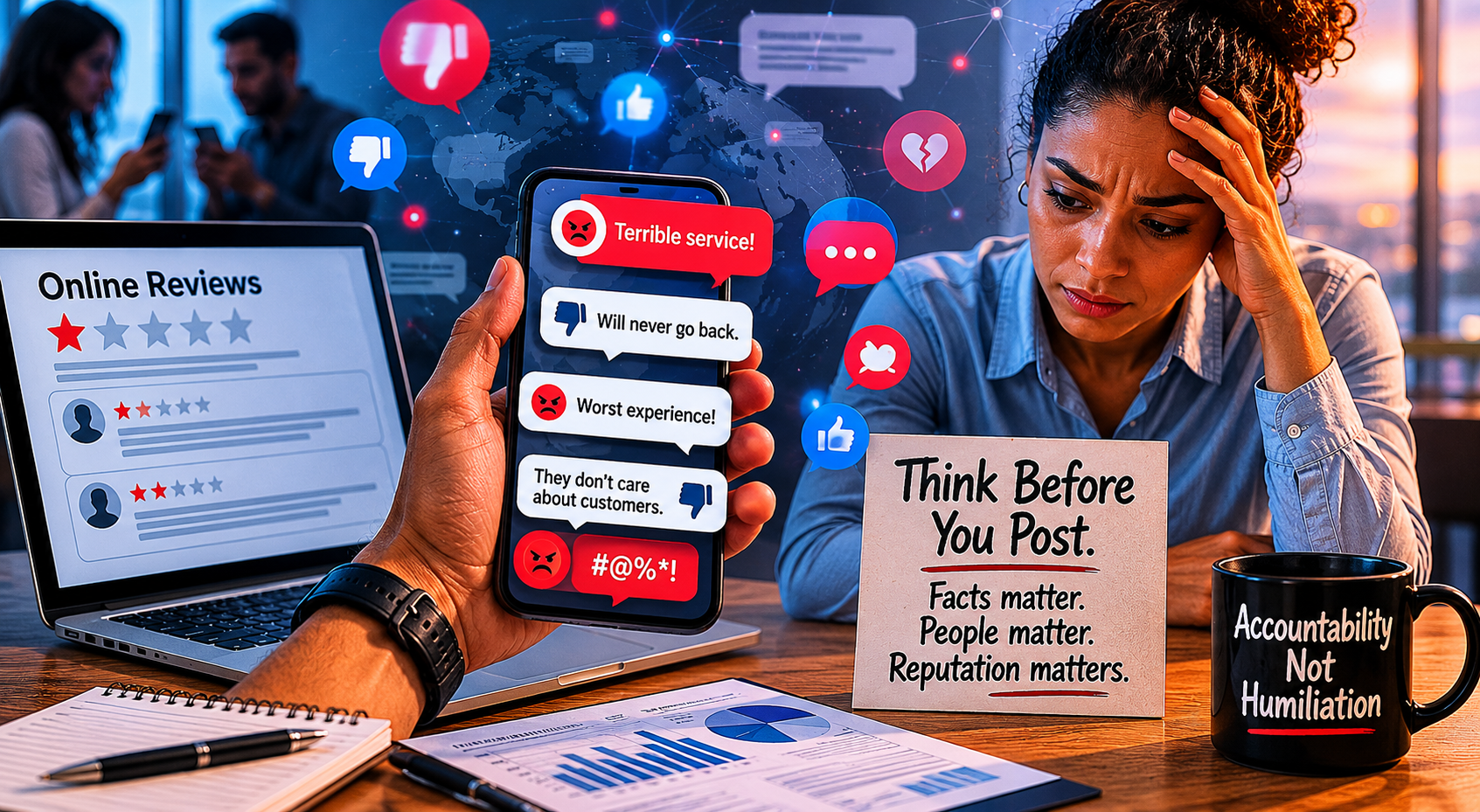
Online reviews and social media have changed the way people communicate with businesses, organizations, and one another. A customer can now share a complaint instantly, and that complaint can reach hundreds, thousands, or even millions of people.
In many cases, online reviews serve a useful purpose. They can help customers make informed decisions, warn others about poor service, and encourage businesses to improve. But the same platforms that allow people to share honest experiences can also be used irresponsibly.
A negative review based on a real experience is one thing. Publicly shaming an employee, exaggerating details, spreading misleading claims, or encouraging others to attack a person or business is something else entirely.
The issue becomes more complicated when workers are personally targeted. Employees may become the subject of online criticism even when they were following company policy, dealing with difficult circumstances, or had little control over the situation.
Our Perspective
Public criticism should come with responsibility.
Customers have the right to speak about their experiences, but that right should not become an excuse to damage someone’s reputation unfairly. A bad experience does not automatically justify public humiliation, harassment, or the spreading of incomplete information.
The phrase “the customer is always right” has often been used to defend complaints, but it does not mean every accusation is accurate or fair. Businesses can make mistakes, employees can make mistakes, and customers can make mistakes too.
When people rush to shame others online, facts can quickly become buried beneath emotion, frustration, bias, or exaggeration. Once that happens, the conversation may no longer be about accountability. It may become about punishment.
There is a difference between leaving a fair review and using the internet as a weapon.
Why It Matters
Online reputations matter. A single post or review can affect a business’s income, an employee’s job, and a person’s emotional well-being.
For small businesses, public accusations can have lasting consequences. Even when claims are later corrected, the damage may already be done. People often remember the accusation more than the correction.
This does not mean businesses should avoid accountability. Poor service, unethical behavior, unsafe conditions, or mistreatment should be addressed. But complaints should be honest, specific, and fair.
Before posting, people should ask themselves:
Is this accurate?
Is this necessary?
Am I describing what happened, or am I trying to embarrass someone?
Am I holding a business accountable, or am I encouraging others to attack?
The Takeaway
Public reviews and social media complaints can be powerful tools, but they should be used carefully.
Fair criticism can help businesses improve and protect consumers. Public shaming, however, can harm people, distort the truth, and create unnecessary damage.
The goal should be accountability, not humiliation. In a digital world where one post can travel quickly, people should remember that behind every business, review, and complaint are real human beings.

