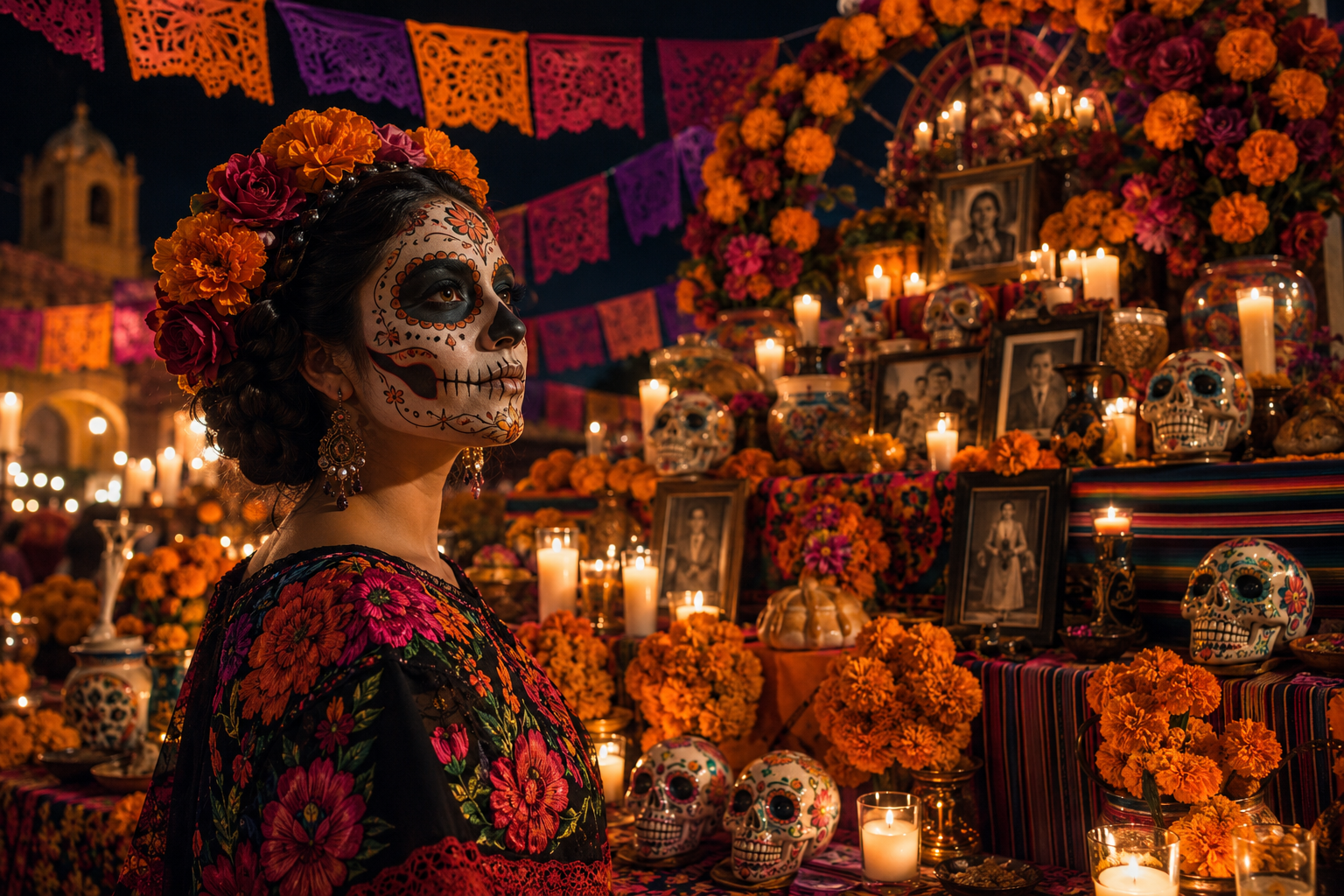
A time of delight and remembrance alike, the night was busy with smiles, rapid footsteps, music, movement, and celebration all around. Nights like these, filled with warm greetings, food, festivities, and color, make it no wonder people kept trying to move closer, to be involved, and to experience the happiness in the air.
Día de los Muertos, or Day of the Dead, for those unfamiliar, was indeed a spectacle to see. There were so many people gathered in such small areas, and yet everyone seemed to be having a beautiful and wondrous moment.
The place, San Antonio, Texas, for Día de los Muertos. When we first arrived, we didn't have media passes as it was last-minute, but we did, however, have our credentials, and soon after, we were allowed inside. Once we entered the sea of people, we were able to see more of what was happening, and it was beautiful.
We took photos of people who seemed more than happy to smile for us. Some even joked with us. One couple, pictured near a giant sugar skull with what appeared to be a heart, had such great personalities and charm that they stood out immediately.
Aside from all the creativity, I do have to say those neon lights were intense. Annoying, even. They seemed to cause headaches not only for me, but for others as well. Heck, even an SAPD officer agreed the neon lights were horrible, though he joked with us about it. Not going to lie, they were a lot.
Overall, the people were great, and some of the officers who helped us out were great as well. I made it a point to hold my camera high by my shoulder with the lens up so it would not get bumped by others. However, while trying to take photos, boom and a bump, and yes, you guessed it. People ran right into me. It was okay, though. It was worth it. With a crowd that size, it was bound to happen a few times throughout the night.
Of course, Día de los Muertos is more than color, music, food, and painted faces. Its roots reach back thousands of years to Indigenous peoples of Mesoamerica, where death was often viewed not simply as an ending, but as part of the ongoing journey of life. In some traditions, it was believed that the dead traveled to another place and that their journey required guidance, remembrance, and offerings from the living.
Family members would leave food, water, and other items for their loved ones, helping them along their journey in the afterlife. Over time, these practices became part of the tradition many recognize today, a celebration that honors those who have passed while keeping their memory alive among the living.
In Medieval Spain, families also honored the dead with offerings, candles, and visits to burial sites. When Spanish conquistadors arrived in the New World in the 16th century, European Catholic customs blended with Indigenous traditions, creating the deeply meaningful observance now known as Día de los Muertos.
And standing there, surrounded by marigolds, candles, sugar skulls, music, laughter, and remembrance, it was easy to see why the tradition continues. It is not only about death. It is about memory, family, and about love refusing to disappear.