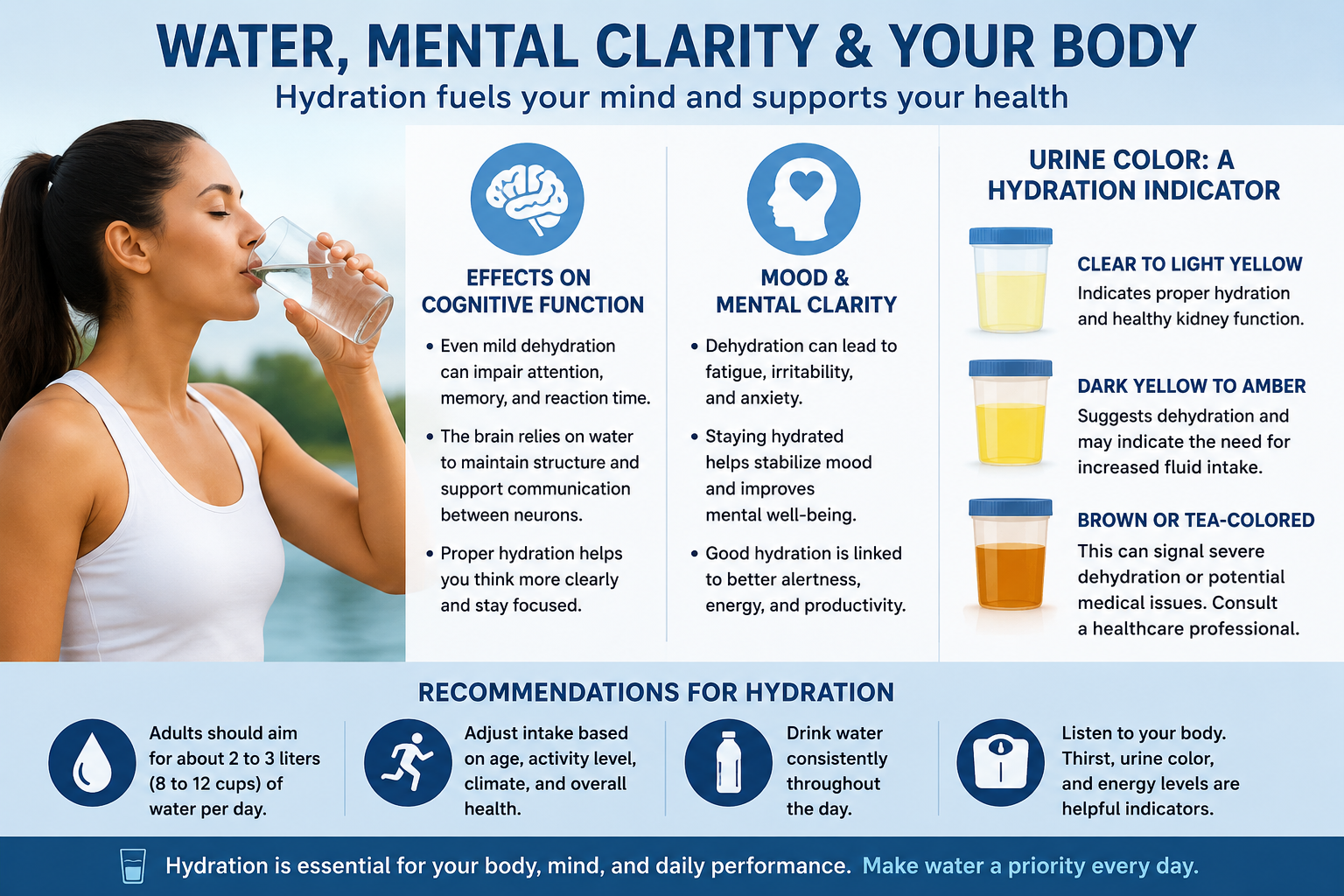
The Facts
Water is essential for life, but its role goes beyond basic survival. The body relies on water to help regulate temperature, protect sensitive tissues, support digestion, move nutrients, and remove waste through urination, perspiration, and bowel movements, according to the Centers for Disease Control and Prevention (CDC, 2026).
Water also plays a role in mental performance. The CDC notes that dehydration may contribute to unclear thinking, mood changes, overheating, constipation, and kidney stones (CDC, 2026). Hydration needs vary from person to person. Age, activity level, climate, pregnancy, breastfeeding, illness, and overall health can all affect how much water a person needs. The CDC states that people may need more water in hot climates, during physical activity, when running a fever, or when experiencing diarrhea or vomiting (CDC, 2026).
Hydration and Mental Clarity
The brain depends on proper hydration to function well. When fluid levels are low, some people may notice changes in focus, alertness, energy, and mood.
Dehydration does not always appear as a dramatic health emergency. In everyday life, it may show up as fatigue, trouble concentrating, irritability, or a general sense of sluggishness. While hydration alone will not solve every problem related to focus or mental performance, it is one of the basic physical needs that supports daily functioning. A simple glass of water is not a cure-all, but it can be part of maintaining better mental clarity, especially when combined with sleep, nutrition, physical activity, and regular health care.
Urine Color and Hydration
Urine color can offer a general clue about hydration, although it should not be treated as a perfect medical test.
Mayo Clinic notes that regular urine color usually ranges from clear to pale yellow. The more fluids a person drinks, the more diluted the urine tends to appear. When a person drinks less, the yellow color can become stronger (Mayo Clinic, 2025). A darker yellow or amber color may suggest that a person needs more fluids. However, urine color can also be affected by foods, medications, supplements, and medical conditions. Mayo Clinic notes that unusual urine colors, including red, orange, dark brown, or cloudy white, can sometimes signal a health concern and may require medical attention (Mayo Clinic, 2025).
A general guide:
Clear to pale yellow: Often reflects good hydration, though completely clear urine throughout the day may also mean a person is drinking more than needed.
Dark yellow to amber: May suggest the body needs more fluids.
Dark brown, orange, red, or cloudy urine: May be linked to dehydration, medication, food, liver issues, blood in the urine, infection, or other medical concerns. A health care provider should be contacted if unusual color continues or is accompanied by pain, fever, yellowing of the skin or eyes, pale stools, or blood in the urine.
Analysis
Hydration is one of the simplest health habits people can overlook.
Many people wait until they feel thirsty before drinking water, but by that point, the body may already be signaling that it needs more fluid. Daily routines, work schedules, heat, exercise, caffeine, alcohol, and illness can all affect hydration. Because of that, drinking water consistently throughout the day is often more useful than trying to make up for low fluid intake all at once.
At the same time, hydration advice should be realistic. Not everyone needs the exact same amount of water. Some people get fluids from water, other beverages, and water-rich foods such as fruits and vegetables. The goal is not to follow a rigid number blindly, but to pay attention to the body’s signals and adjust based on activity, environment, and health needs.
Urine color can be a helpful everyday indicator, but it should not replace medical evaluation. If something looks unusual, persists, or comes with other symptoms, it should be taken seriously.
Why It Matters
Hydration affects daily life in practical ways. It can influence energy, comfort, physical performance, digestion, temperature regulation, and mental clarity. For workers, students, athletes, older adults, and people spending time outdoors, hydration can make a noticeable difference in how they feel and function.
It also matters because dehydration can become more serious in certain situations. Hot weather, strenuous activity, fever, vomiting, diarrhea, and some medical conditions can increase the risk of fluid loss. In those cases, people may need to be more intentional about replacing fluids and, when appropriate, electrolytes.
The Takeaway
Water supports the body and mind in ways that are easy to take for granted.
Staying hydrated can help support clearer thinking, better energy, normal body temperature, digestion, and healthy waste removal. Urine color can provide a simple clue about hydration, but it is only one sign among many.
The best approach is simple: drink water regularly, adjust intake when activity or weather increases fluid loss, pay attention to thirst and urine color, and seek medical guidance when symptoms or unusual changes appear.
Hydration is not a trend. It is basic maintenance for the body.
References
Centers for Disease Control and Prevention. (2026). About water and healthier drinks. The CDC explains that water helps regulate temperature, protect tissues, remove waste, and prevent dehydration-related issues such as unclear thinking and mood changes. https://www.cdc.gov/healthy-weight-growth/water-healthy-drinks/index.html
Mayo Clinic. (2025). Urine color: Symptoms and causes. Mayo Clinic explains that normal urine color ranges from clear to pale yellow and that darker or unusual urine colors may sometimes indicate dehydration, medication effects, food effects, or medical concerns. https://www.mayoclinic.org/diseases-conditions/urine-color/symptoms-causes/syc-20367333