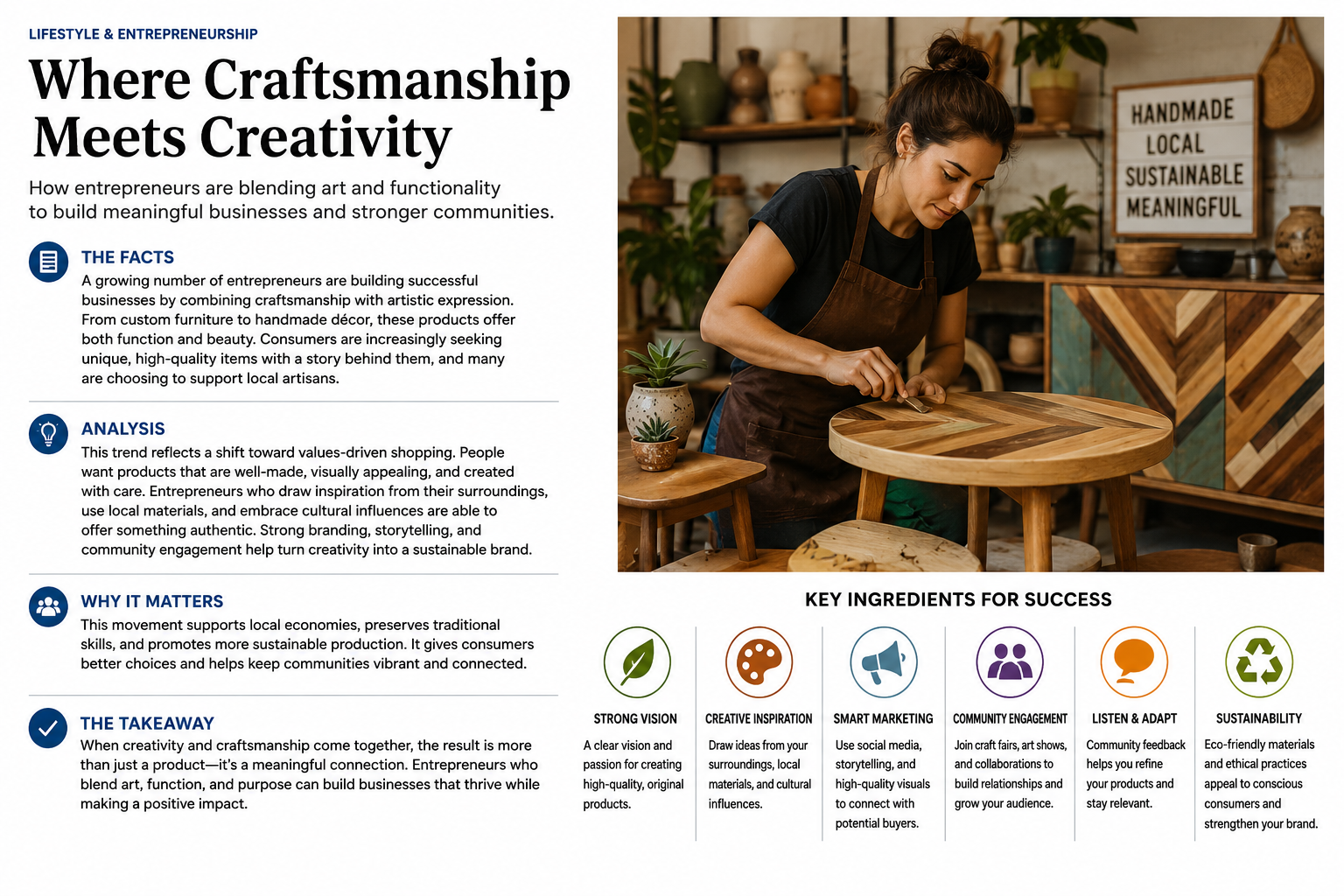
In today’s marketplace, many consumers are looking for products that offer more than basic function. Handmade furniture, custom decor, and artisan-made household items have become part of a growing interest in products that combine usefulness with visual appeal.
This approach can include custom tables, shelving, wall art, handmade lighting, ceramics, woodwork, textiles, and other items designed to serve a practical purpose while also adding character to a home or workspace. For small business owners and independent makers, this area of the market offers an opportunity to combine craftsmanship with artistic expression. Many artisan businesses begin with a clear creative vision, a specific skill, and a desire to offer something different from mass-produced goods. Local materials, cultural influences, and personal storytelling can also shape these products. When a handmade item reflects a place, tradition, or maker’s personal style, it can give customers a stronger connection to what they are buying.
The appeal of handmade and artisan products is not only about appearance. It is also about meaning. A handmade piece can make a room feel more personal because it often carries the mark of the person who created it. Unlike mass-produced items, custom pieces may reflect a maker’s choices, imperfections, materials, and creative process. That does not mean every handmade product will succeed in the marketplace. Quality, pricing, consistency, customer service, and visibility still matter. A product may be creative, but it must also be useful, durable, and presented professionally. Marketing plays an important role. Social media gives artisans and small businesses a way to show their process, display finished work, explain their materials, and connect directly with potential buyers. Strong photography and clear storytelling can help customers understand why a handmade piece has value. Local craft fairs, art shows, pop-up markets, and community events can also help build recognition. These spaces allow customers to see products in person, ask questions, and meet the people behind the work.
Handmade and artisan businesses can support local economies and strengthen community identity. When customers buy from local makers, they are often supporting independent workers, small studios, and creative entrepreneurs. There is also a sustainability angle. Some artisans use reclaimed wood, recycled materials, natural finishes, or low-waste production methods. These practices may appeal to customers who want products that feel thoughtful, durable, and less disposable. However, sustainability claims should be made carefully. Businesses should be clear and honest about what materials they use, how products are made, and what environmental benefits can realistically be supported.
The combination of craftsmanship and art gives entrepreneurs a chance to create products that are both useful and meaningful. For makers, success depends on more than creativity alone. It requires quality work, clear branding, strong presentation, fair pricing, and a connection with customers. For consumers, handmade products offer a way to bring originality into everyday spaces while supporting people who build, design, and create with intention. At its best, this market does more than sell products. It supports creativity, encourages local enterprise, and helps turn everyday objects into pieces with a story.