The Facts
“Let’s just go for a drive, shall we?” For some drivers, that may sound simple. For others, especially those unsure about their vehicle documents or insurance status, it can quickly become stressful.
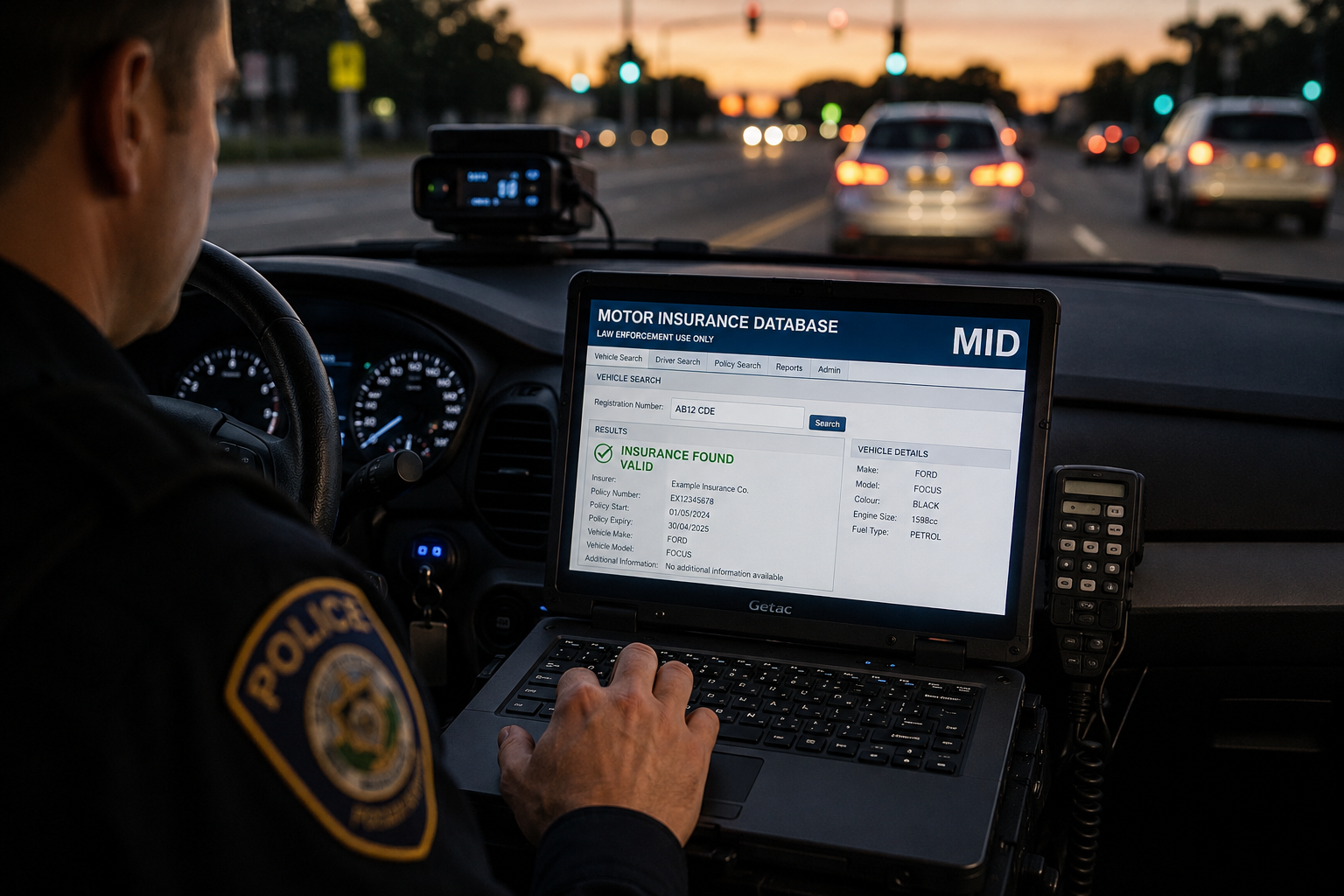
In the United Kingdom, the Motor Insurance Database, commonly known as MID, serves as a central record of insured vehicles. The database is managed by the Motor Insurers’ Bureau and allows drivers to check whether their vehicle has an insurance policy recorded through the public askMID/Navigate service.
The database also supports enforcement of insurance requirements. In the U.K., vehicles generally must either have valid insurance or be officially declared off the road through a Statutory Off Road Notification, known as SORN. This requirement is part of Continuous Insurance Enforcement law.
For drivers, this means the days of relying only on a paper insurance document are changing. Digital records, insurer reporting, vehicle registration data, and plate-checking technology have made it easier for officials to identify vehicles that may not have current insurance.
The Motor Insurers’ Bureau notes that it can take a few days after purchasing a new policy for insurance details to appear in Navigate. The organization advises drivers to keep insurance details with them, especially after buying or changing a policy.
How the Technology Works
Vehicle insurance databases are designed to help verify whether a vehicle is insured. In the U.K., drivers can use the public system to check their own vehicle’s insurance status. If the vehicle does not appear as insured, drivers are advised to contact their insurance provider, because only the insurer can update the record.
Law enforcement agencies may also use vehicle information and plate recognition tools as part of roadside enforcement. This can allow officers to identify possible insurance issues before or during a traffic stop.
That does not mean every database result tells the full story immediately. Delays, recent policy changes, administrative errors, or reporting issues can sometimes affect what appears in a system. For that reason, drivers should keep policy information available and contact their insurer quickly if a vehicle does not appear correctly.
Our Perspective
Technology has changed the traffic stop.
There was a time when an officer asking for “license and registration” meant the paper documents in the glove compartment carried most of the weight. Today, digital systems can provide officials with information before a driver has even rolled down the window.
That shift can improve enforcement and help remove uninsured vehicles from the road. It can also create anxiety for drivers who may not fully understand how these systems work or who recently changed policies and are waiting for records to update.
The concern is not simply that databases exist. The concern is whether people understand them, whether records are accurate, and whether drivers know what to do when something appears wrong.
Technology can be useful, but it should not replace clear communication, common sense, and proper verification.
Why It Matters
Driving without insurance can create serious consequences. It can affect victims of crashes, increase financial risk, and lead to penalties for drivers. Digital insurance databases are one way governments and enforcement agencies attempt to reduce those risks.
At the same time, drivers have a responsibility to make sure their information is accurate and current. If a vehicle is insured but does not appear properly in a database, the driver should contact the insurance provider rather than assuming the issue will correct itself.
Public lookup tools should also be used carefully. The U.K. system is intended for specific purposes, such as checking your own vehicle or checking insurance details after an accident. Readers should avoid using third-party or unfamiliar websites that request personal or vehicle information unless they are certain the site is legitimate.
The Takeaway
Vehicle insurance enforcement is becoming more digital, and drivers should be prepared.
Whether through roadside checks, plate recognition tools, or public insurance lookup systems, technology is making it harder to rely on excuses such as “I have insurance, but the paper is at home.”
The safest approach is simple: keep your insurance current, verify that your records are correct, and avoid driving if your coverage has lapsed.
And while technology may help officers identify uninsured vehicles, the responsibility still begins with the driver.
Do not drink and drive.
Do not text and drive.
Do not drive uninsured.
Reader Note
The MID and askMID/Navigate system discussed in this article applies to the United Kingdom. Rules, databases, and enforcement systems may differ in the United States and other countries.
Drivers should use official government or recognized insurance-industry websites when checking vehicle insurance status. External links are used at the reader’s own discretion.
Official U.K. insurance check resource: askMID / Navigate
Purpose: Check whether a vehicle has an insurance policy recorded in the U.K. Motor Insurance Database.